Is Oat Milk Good for You? Benefits, Downsides & Tips
In this article
- What is oat milk?
- Oat milk nutrition: how does it compare?
- The benefits of oat milk
- It's dairy-free, lactose-free and nut-free
- It's low in saturated fat
- It contains some beta-glucan
- The downsides of oat milk
- It's low in protein
- Even unsweetened oat milk contains free sugars
- Many brands are classed as ultra-processed
- It may not contain iodine
- Is oat milk good for weight loss?
- Oat milk vs other milks
- How to choose a healthier oat milk
- Frequently asked questions
For most adults, yes: unsweetened oat milk that's fortified with calcium and vitamins can be a perfectly good part of a balanced diet. It's naturally free from dairy, lactose and nuts, it's low in saturated fat, and it contains a little of the same soluble fibre (beta-glucan) that makes porridge good for your cholesterol. But it isn't a nutritional copy of cow's milk. It has far less protein, the unfortified and sweetened versions miss out on key nutrients, and even unsweetened oat milk contains a small amount of free sugars from the way it's made.
So whether oat milk is "good for you" really depends on which carton you pick, how much you drink, and what it's replacing. Below, we look at what's in it, how it compares with dairy and other plant drinks, what it means for weight management, and how to choose a good one.
At a glance
- Unsweetened, fortified oat milk can be a healthy dairy alternative for most adults
- It's low in saturated fat and naturally free from dairy, lactose and nuts
- It contains much less protein than cow's milk: around 1g per 200ml glass compared with 7g
- Even unsweetened oat milk contains a small amount of free sugars, because processing breaks oat starch down into sugars
- Oat milk contains some beta-glucan, but you'd need several glasses a day to reach the 3g linked with lower cholesterol
- Choose versions labelled unsweetened and fortified with calcium, vitamin B12 and ideally iodine
- If you have coeliac disease, only choose oat milk labelled gluten-free
What is oat milk?
Oat milk is made by blending oats with water and straining out the pulp to leave a creamy, milk-like drink. In the UK, you'll often see it sold as an "oat drink". The NHS lists oat drinks alongside soya, rice, almond, hazelnut, coconut, quinoa and potato drinks as dairy alternatives.
Shop-bought oat milks usually contain more than oats and water. According to the British Heart Foundation (BHF), many include added vegetable oils for creaminess, plus ingredients such as stabilisers, emulsifiers and salt, and most are fortified with calcium and vitamin B12, because oats don't naturally contain much calcium.
Oat milk nutrition: how does it compare?
The table below uses average figures per 100ml from the BHF. Figures are for unsweetened versions, with sweetened versions in brackets. Calcium and vitamin B12 in plant drinks are only present when they've been added, so always check your brand's label.
| Per 100ml | Calories | Saturated fat | Sugars | Protein | Calcium |
|---|---|---|---|---|---|
| Whole cow's milk | 66kcal | 2.2g | 5.0g | 3.6g | 120mg |
| Skimmed cow's milk | 35kcal | 0.1g | 5.0g | 3.6g | 120mg |
| Oat drink | 45kcal (60kcal) | 0.2g | 2.5g (5.0g) | 0.7g | 120mg if fortified |
| Soya drink | 38kcal (52kcal) | 0.2g | 0.8g (4.0g) | 3.5g | 120mg if fortified |
| Almond drink | 20kcal (32kcal) | 0.1g | 0.5g (3.5g) | 0.3g | 120mg if fortified |
A few things stand out:
- Calories: unsweetened oat milk sits between skimmed and whole cow's milk. Sweetened versions can be close to whole milk.
- Saturated fat: oat milk is low in saturated fat, much lower than whole milk and similar to skimmed.
- Protein: oat milk has a fraction of the protein in cow's milk or soya drinks.
- Sugars: the sugar figures look lower than cow's milk, but they're not the same type of sugar. More on that below.
The benefits of oat milk
It's dairy-free, lactose-free and nut-free
Oat milk is a useful option if you avoid dairy, whether because of a milk allergy, lactose intolerance or personal choice, and it's also free from nuts and soya. The NHS says unsweetened, calcium-fortified dairy alternatives made from plants such as soya or oats can make good alternatives to dairy products.
It's low in saturated fat
The BHF describes oat milks as generally low in saturated fat, although fat content varies by brand depending on whether oil has been added. Swapping a higher-fat milk for a lower-fat option can be a helpful change if you're watching your saturated fat intake. Our guide to normal cholesterol levels in the UK explains why saturated fat matters for your heart.
It contains some beta-glucan
Oats contain a soluble fibre called beta-glucan. The BHF explains that eating at least 3g of oat beta-glucan a day, as part of a healthy diet, has been shown to lower LDL ("bad") cholesterol.
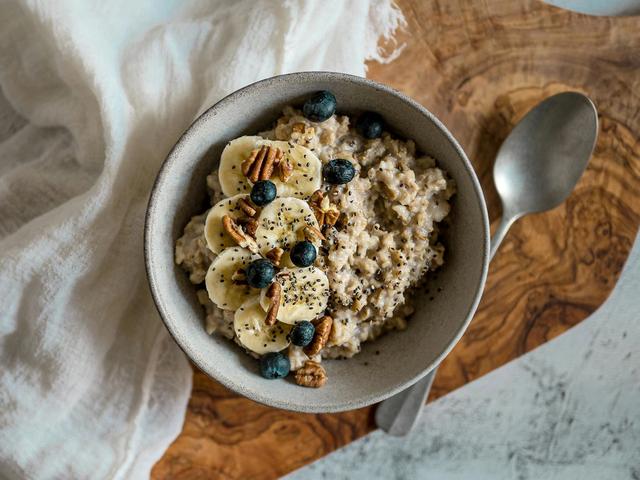
The catch is that most oat milks only contain around 0.5g to 1g of beta-glucan per 250ml. To reach 3g a day from oat milk alone, you'd need to drink roughly 750ml to 1.5 litres, which is 3 to 6 glasses. So oat milk can contribute, but it's not usually enough on its own. If you're specifically trying to boost your beta-glucan, the BHF suggests looking for oat drinks that state they contain 1g of beta-glucan per portion, and points out that whole oats are more effective: 40g of oats in a bowl of porridge provides around 2g. Our article on porridge for weight loss has ideas for making the most of oats.
The downsides of oat milk
It's low in protein
This is the biggest nutritional difference. The BHF says oat drinks usually contain only around 1g of protein per 200ml, compared with 7g in the same amount of cow's milk. Soya drinks are much closer to cow's milk for protein.
That matters if you rely on milk in your cereal, porridge or coffee as part of your daily protein. Protein helps keep you full and supports muscle, which is especially important when you're trying to lose weight. If you switch to oat milk, it's worth making sure you're getting protein from elsewhere, such as eggs, fish, lean meat, beans, lentils, tofu or yoghurt. Our guide to protein shakes for weight loss covers how much protein you might need and where to get it.
Even unsweetened oat milk contains free sugars
Oats are high in starch, not sugar. But the BHF explains that the process used to make oat milk breaks some of that starch down into free sugars, so even unsweetened oat drinks contain small amounts of free sugars, despite having no added sugar.
This is different from cow's milk. The NHS says sugar found naturally in milk doesn't count as free sugars, while sugars added to food and drink do. The NHS advises adults to have no more than 30g of free sugars a day, roughly 7 sugar cubes.
In practice, a splash of unsweetened oat milk in your tea won't make much difference. But if you drink several large oat lattes a day, or choose sweetened or flavoured versions, the free sugars can add up.
Many brands are classed as ultra-processed
The BHF notes that most plant-based drinks are classed as ultra-processed foods because they contain ingredients such as stabilisers, emulsifiers, salt, oil, sugars or sweeteners. It's careful to add that this doesn't automatically make them unhealthy, and they can fit into a balanced diet. But it's a good reason to read the ingredients list and compare brands.
It may not contain iodine
Iodine is needed to make thyroid hormones. The British Dietetic Association (BDA) says milk and dairy products are the main sources of iodine for most people in the UK, and that adults need 150 micrograms a day. If you swap dairy for a plant drink, you could miss out. The BDA notes that some soya and oat drinks are now fortified with iodine, but not all are, so check the label.
Is oat milk good for weight loss?
No single drink causes or prevents weight gain. What matters is your overall eating pattern. But your choice of milk can make a small difference, especially if you drink a lot of it.
Where oat milk can help:
- Unsweetened oat milk has fewer calories than whole cow's milk (about 45kcal per 100ml compared with 66kcal, according to the BHF), so it can be a lighter swap if you currently drink whole milk.
- It's low in saturated fat.
Where it may not help:
- It's slightly higher in calories than skimmed cow's milk (45kcal compared with 35kcal per 100ml), so switching from skimmed won't save calories.
- It's much lower in protein, which may leave you less satisfied, particularly at breakfast.
- Sweetened, flavoured and "barista" versions can be higher in calories and sugars. Large coffee-shop drinks made with oat milk, especially with added syrups, can add up quickly.
If weight management is your goal, a good approach is to choose whichever unsweetened milk you enjoy and will use sensibly, keep an eye on portion sizes in larger drinks, and make sure your meals contain enough protein and fibre. Our guide to how much fibre you need per day shows how to build fibre into your meals, and our article on low GI foods explains how slower-release carbohydrates can help keep you fuller for longer.
Oat milk vs other milks
There's no single "healthiest" milk. It depends on what you need.
- Cow's milk is a natural source of protein, calcium and iodine. Skimmed and semi-skimmed versions are lower in fat and calories. The NHS describes milk and dairy products as great sources of protein and calcium.
- Soya drink is the closest plant drink to cow's milk for protein (3.5g per 100ml, according to the BHF), and unsweetened versions are low in sugars.
- Almond drink is usually the lowest in calories but contains very little protein.
- Oat drink is creamy, tastes slightly sweet, works well in hot drinks and is a good choice if you need to avoid nuts and soya.
If you're replacing dairy completely, the BHF says the UK's Scientific Advisory Committee on Nutrition (SACN) recommends choosing sugar-free plant-based drinks fortified with calcium, vitamin B12 and iodine, to match the key nutrients in cow's milk.
How to choose a healthier oat milk
When you're comparing cartons in the supermarket, check the label for:
- "Unsweetened" or "no added sugar". This keeps free sugars and calories lower. Remember even unsweetened versions contain some sugars, so a lower sugars figure per 100ml is better.
- Calcium. Look for added calcium, ideally around 120mg per 100ml, similar to cow's milk.
- Vitamin B12. The BHF notes it's usually added alongside calcium, and it's especially useful if you eat few or no animal products.
- Iodine. Not all brands add it. If oat milk is your main milk, the BDA advises choosing one that's fortified with iodine.
- Beta-glucan. If you're interested in the cholesterol benefits, look for drinks stating 1g of beta-glucan per portion.
- Gluten-free. The BHF says only oat drinks labelled gluten-free are suitable for people with coeliac disease.
- The ingredients list. Shorter lists with less added oil and fewer additives are generally a better choice, though a few stabilisers or emulsifiers aren't a reason to avoid a product on their own.
If you're comparing other drinks that are often made with oat milk, such as meal replacement shakes or protein coffees, our guides to whether Huel is good for you and protein coffee look at what's in them.
The bottom line
Oat milk can be good for you as part of a balanced diet, especially if you choose an unsweetened version fortified with calcium, vitamin B12 and iodine. It's low in saturated fat, free from dairy, lactose and nuts, and contains a little cholesterol-lowering beta-glucan, though not enough on its own to reach the 3g a day linked with lower LDL cholesterol. Its main drawbacks are that it's much lower in protein than cow's milk or soya drinks, and even unsweetened versions contain some free sugars. For weight management, it's a lighter swap for whole milk but not for skimmed milk. Choose the unsweetened milk you enjoy, read the label, watch large or flavoured drinks, and make sure your protein comes from elsewhere in your diet.
This article is for informational purposes only and does not constitute medical advice. Always consult with a qualified healthcare professional before starting any treatment.