Low GI Foods: A UK List and What GI Really Means
In this article
- What the glycaemic index actually measures
- Glycaemic index vs glycaemic load
- Low GI foods list: a UK guide by food group
- Grains, bread and rice
- Oats and breakfast
- Potatoes
- Fruit
- Pulses and vegetables
- Dairy
- Why low GI isn't the same as healthy
- How cooking and combining change GI
- Cook pasta al dente
- Cook and cool your starches
- Add protein, fat and fibre
- Choose less processed, higher fibre versions
- What the evidence says about GI, blood sugar and weight
- For people with diabetes
- For long-term health
- For weight
- Fibre: the partner that matters most
- A day of low GI eating
- Who should take extra care
- Frequently asked questions
Low GI foods are carbohydrate foods that raise your blood sugar slowly rather than in a sharp spike. On the glycaemic index (GI) scale of 0 to 100, a score of 55 or below counts as low. Most pulses, many whole fruits, non-starchy vegetables, unsweetened dairy and less processed grains such as basmati or brown rice, barley, quinoa and rye bread sit in the low band.
That's the quick answer. The more useful one is that GI is a helpful guide with some real blind spots, and knowing those blind spots is what stops a low GI list from steering you towards chocolate and crisps. Below you'll find a practical UK list by food group, what the numbers actually mean, what the evidence says about GI and weight, and the simple tricks that lower the GI of a meal without changing what's on the plate very much.
At a glance
- GI ranks carbohydrate foods from 0 to 100 by how quickly they raise blood sugar: 55 or below is low, 56 to 69 is medium and 70 or above is high
- Good low GI choices include beans, lentils, peas, apples, pears, berries, most vegetables, unsweetened yoghurt and milk, steel-cut oats, rye bread, basmati and brown rice
- Low GI does not automatically mean healthy: chocolate has a low GI because of its fat content
- Portion size often matters more than GI, and how you cook, cool and combine foods changes their GI
- For long-term health, the evidence for fibre and wholegrains is considerably stronger than the evidence for GI on its own
- If you take insulin or other medicines that can cause hypos, talk to your diabetes team before changing your carbohydrates
What the glycaemic index actually measures
When you eat a food containing carbohydrate, it's broken down into glucose that enters your bloodstream. Different carbohydrates are digested at different speeds. Diabetes UK describes GI as a ranking from 0 to 100 of how quickly each carbohydrate-based food or drink makes blood sugar rise after you eat it, and uses three bands:
| GI band | Score | What it means |
|---|---|---|
| Low GI | 55 or below | Raises blood sugar slowly, sometimes called "slow release" carbs |
| Medium GI | 56 to 69 | Raises blood sugar at a moderate rate |
| High GI | 70 or above | Raises blood sugar quickly |
Two things are worth knowing straight away. First, GI only applies to foods that contain carbohydrate. Chicken, eggs, fish, oils and butter don't have a meaningful GI because there's little or no carbohydrate in them for the test to measure. Second, GI values are measured on a food eaten on its own, in a lab. Real meals are rarely like that, which is why the number on a chart is a starting point rather than a verdict.
Glycaemic index vs glycaemic load
GI tells you how fast a carbohydrate is absorbed, not how much of it you're eating. Glycaemic load (GL) tries to fix that. Diabetes UK explains that glycaemic load combines the GI rating with the amount of carbohydrate in a portion of food.
In everyday terms, a small amount of a higher GI food can have less overall effect than a large plate of a lower GI one. The British Dietetic Association puts it plainly: the portion size of carbohydrate-rich foods often has the greatest impact. If you only remember one thing from this article, make it that.
Low GI foods list: a UK guide by food group
This list draws on the examples published by Diabetes UK and the British Dietetic Association. We've deliberately avoided quoting a precise GI number for each food: published values vary between brands, varieties and testing labs, and the band is what's useful when you're shopping.
| Food group | Low GI choices | Medium GI | Higher GI |
|---|---|---|---|
| Grains and rice | Basmati, long grain and brown rice; bulgur wheat, barley, quinoa; coarse oatmeal such as steel-cut oats; rye bread | Couscous, millet | Instant white rice, glutinous rice; white bread, bagels, baguette, ciabatta |
| Potatoes and starchy veg | New potatoes with skins, sweet potato, yam, plantain | Boiled potato, chips | Jacket potato |
| Pulses | Beans, peas, lentils | ||
| Fruit | Apples, pears, oranges, strawberries, raspberries, grapes, dried apricots | Riper and more tropical fruit, such as yellow or brown bananas, mango and pineapple, raises blood sugar more quickly | |
| Vegetables | Carrots, tomatoes, spinach, mushrooms, broccoli | ||
| Dairy | Unsweetened milk, unsweetened yoghurt |
Grains, bread and rice
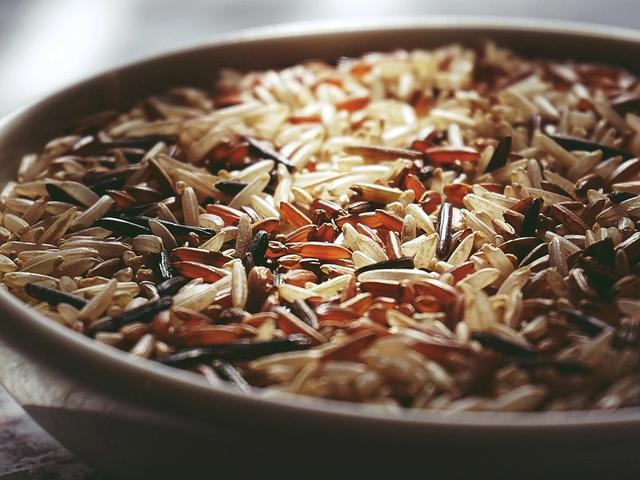
This is where the biggest everyday swaps live, because bread, rice and pasta make up a large share of carbohydrate in a typical UK diet. Rye and dense wholegrain breads, basmati or brown rice, barley, bulgur wheat and quinoa all sit in the low band. Instant white rice and soft white breads such as bagels, baguettes and ciabatta sit in the high band.
If rice is a staple in your house, our guide to choosing rice for weight loss goes through the different types and sensible portions.
Oats and breakfast
Diabetes UK lists coarse oatmeal, such as steel-cut oats, among its low GI examples. Coarser, less processed oats are the closest match to that, so if you usually buy fine instant sachets, jumbo or steel-cut oats are an easy swap to try. We've covered porridge in more detail, including toppings and portions, in porridge for weight loss.
Potatoes
Potatoes are the food most people are surprised by. The BDA classes a jacket potato as high GI and a boiled potato as medium, while new potatoes cooked with their skins on are low. That doesn't mean jacket potatoes are off the menu. As we'll see below, what you put with one changes its effect considerably.
Fruit
Most whole fruit is low GI, helped by its fibre. The BDA notes that riper and more tropical fruits, such as yellow or brown bananas, mango and pineapple, raise blood sugar more quickly. A slightly green banana and a very spotty one are not the same food as far as your blood sugar is concerned. Whole fruit is generally a better choice than fruit juice.
Pulses and vegetables
Beans, lentils and peas are close to the perfect low GI food: slowly absorbed, high in fibre and a decent source of protein. Non-starchy vegetables like broccoli, spinach, mushrooms, tomatoes and carrots are low GI and low in calories, so they earn their place on the plate on several counts at once.
Dairy
Unsweetened milk and plain yoghurt are low GI. Flavoured and sweetened versions are a different matter, so check the label for added sugar.
Why low GI isn't the same as healthy
Here is the catch that most GI charts don't mention. Fat slows the absorption of carbohydrate, so fatty foods can score surprisingly well. Diabetes UK points out that most chocolates have a low GI because of their fat content, and that crisps have a lower GI than potatoes cooked without fat.
Nobody would sensibly argue that crisps are a better choice than a boiled potato. Diabetes UK warns that focusing only on GI can leave your diet unbalanced and high in fat and calories, which could lead to weight gain and increase your risk of heart disease. GI is one useful lens on a food, not a score of how good it is for you.
The practical upshot: use GI to choose between similar carbohydrate foods (rye bread versus white bread, basmati versus instant rice, an apple versus a glass of juice), not to decide whether something belongs in your diet at all.
How cooking and combining change GI
The GI of a food isn't fixed. The BDA lists several everyday factors that change it, and most of them are easy to use at home.
Cook pasta al dente
Softer pasta has a higher GI than pasta cooked al dente. Taking it off the heat a couple of minutes earlier is one of the simplest changes you can make.
Cook and cool your starches
According to the BDA, cooked and cooled starchy foods such as potatoes, pasta, beans and rice used in salads have a lower GI. Freezing and toasting bread has the same effect. A slice of bread from the freezer, toasted, is a small but genuine improvement on fresh white bread.
If you're cooling rice to use later, follow Food Standards Scotland's advice on storing cooked rice safely: cool it quickly, keep it in the fridge, use it within a day and reheat it until it's steaming hot. Cooked rice left sitting at room temperature can cause food poisoning.
Add protein, fat and fibre
Protein, fat and fibre slow digestion, so when you eat them alongside carbohydrate, the carbohydrate is absorbed more slowly. The BDA gives a neat example: a jacket potato eaten on its own is high GI, but keeping the skin on, adding salad for fibre, tuna for protein and a small amount of mayonnaise for fat reduces its impact on blood sugar.
This is the single most useful idea in this whole article. You rarely eat carbohydrate on its own, and building meals around protein and vegetables does more for steady blood sugar than memorising a chart. If you want ideas, our list of high-protein, low-calorie foods is a good place to start.
Choose less processed, higher fibre versions
The BDA recommends wholegrain, higher fibre and no added sugar versions of carbohydrate foods, because fibre helps to stabilise blood glucose and lowers the GI of a food. Less processed foods also tend to be more filling.
What the evidence says about GI, blood sugar and weight
GI gets a lot of attention, so it's worth being clear about where the evidence is strong and where it isn't.
For people with diabetes
The strongest evidence for low GI eating is in diabetes. A 2021 meta-analysis in the BMJ pooled 29 trial comparisons involving 1,617 people with type 1 or type 2 diabetes. Compared with higher GI diets, low GI or low GL eating patterns reduced HbA1c by an average of 0.31 percentage points, alongside small reductions in fasting glucose, LDL cholesterol, body weight and blood pressure. The authors rated the certainty of evidence as high for the HbA1c result and described the improvements as small but important, on top of usual diabetes medicines.
A 0.31% fall may not sound dramatic, but it's a meaningful nudge for a food change rather than a medicine. If you're not sure what your own number means, our guide to the HbA1c normal range in the UK explains each band.
For long-term health
For the general population, the picture is more modest. A large set of systematic reviews published in The Lancet in 2019 compared different measures of carbohydrate quality. People eating the most fibre had a 15 to 30% lower risk of death from any cause and from cardiovascular disease, and of coronary heart disease, stroke, type 2 diabetes and bowel cancer, than those eating the least. The benefits were greatest at 25g to 29g of fibre a day.
For GI and glycaemic load, the same review found smaller or no risk reductions, and rated the certainty of that evidence as low to very low. In other words, fibre and wholegrains have the stronger case. Happily, many of the best low GI foods are also high-fibre foods, so you rarely have to choose between them.
For weight
The honest answer is that GI isn't a weight loss tool on its own. Weight change still comes down to overall energy balance, and the BDA notes that portion size often has the greatest effect on blood sugar. Where low GI eating may help is indirectly: meals built around pulses, vegetables, wholegrains and protein tend to be more filling, which can make it easier to eat a bit less without feeling deprived.
If you're doing everything "right" and the scales aren't moving, the reasons are usually more about portions, liquid calories and weekends than about GI. We've gone through the common culprits in why you might not be losing weight in a calorie deficit.
Fibre: the partner that matters most
Because so much of the benefit tracks with fibre, it's worth looking at the two together. The NHS says adults should aim for 30g of fibre a day, but most adults manage only about 20g. The NHS also notes that eating plenty of fibre is associated with a lower risk of heart disease, stroke, type 2 diabetes and bowel cancer.
The good news is that the same swaps do both jobs. Moving from white to wholegrain bread, adding a tin of beans or lentils to a stew, keeping the skins on potatoes and eating whole fruit rather than juice all lower the GI of your meals and raise your fibre intake at the same time. If you're increasing fibre, building up gradually is usually easier on your gut than a sudden jump.
A day of low GI eating
You don't need a special diet plan to eat this way. Here's what an ordinary day might look like, built around the swaps above rather than restriction.
- Breakfast: steel-cut or jumbo oats made with milk, topped with berries and a spoonful of plain yoghurt. Or rye toast with eggs.
- Lunch: a lentil, tomato and vegetable soup with a slice of seeded rye bread, or a cooled new potato and tuna salad with plenty of leaves.
- Snack: an apple or pear with a small handful of nuts, or plain yoghurt.
- Dinner: salmon or chicken with basmati or brown rice, or with al dente wholewheat pasta, and at least half the plate as vegetables.
Notice that every meal pairs carbohydrate with protein and vegetables. That pairing is doing more of the work than the GI of any single ingredient.
Who should take extra care
Low GI eating is a sensible pattern for most adults, but a few groups should get personalised advice first.
If you have diabetes and use insulin or medicines that can cause hypos, talk to your diabetes team before changing your carbohydrates, as mentioned above. If you have kidney disease or have been given a specific diet by a dietitian, check with them first, as some of these foods may not suit a restricted diet. If you have IBS or another gut condition, a sudden increase in pulses and fibre may not agree with you, so go slowly and ask your GP or dietitian if you're unsure.
And if you notice that food lists and rules are making you anxious, or you're starting to cut out whole food groups, step back. GI is meant to help you choose between foods, not to create a list of foods you're afraid of. If that rings true, your GP is a good first conversation.
The bottom line
Low GI foods, with a score of 55 or below, raise your blood sugar more slowly, and the best of them (pulses, whole fruit, vegetables, unsweetened dairy and less processed grains) are also high in fibre. Use GI to choose between similar carbohydrates, keep an eye on portions, and pair carbs with protein and vegetables. Don't let a low score talk you into chocolate, and remember the evidence for fibre is stronger than for GI alone. If your weight is affecting your health despite good food habits, a conversation with a clinician is a sensible next step.
This article is for informational purposes only and does not constitute medical advice. Always consult with a qualified healthcare professional before starting any treatment.