Creatine for Women: Benefits, Safety & What to Know
In this article
- What is creatine?
- Why creatine may matter for women
- Benefits of creatine for women: what the evidence shows
- Strength and muscle
- Holding on to muscle while losing weight
- Bone health after menopause
- Mood and brain function
- Does creatine make women gain weight?
- How much creatine do women take?
- Choosing a product
- Is creatine safe for women?
- What about your kidneys?
- Who might consider creatine, and who probably doesn't need it?
- How to get the most from strength training (with or without creatine)
- Frequently asked questions
Creatine for women is one of the most researched sports supplements, and the short answer is that it seems to work for women in much the same way it does for men. A 2021 review of creatine across women's lives, published in the journal Nutrients, concluded that creatine is "an effective ergogenic aid for increasing strength, power, and athletic performance in females without marked changes in body weight", and described it as a safe, low-risk supplement when taken in recommended doses.
That doesn't make it a must-have, and it isn't a weight-loss supplement. Creatine works best alongside regular strength training, and the research on wider benefits, such as bone health, mood and brain function, is still developing. Below, we explain what creatine is, what the evidence says for women at different life stages, whether it causes weight gain, and how to think about it safely if you're managing your weight.
At a glance
- Creatine helps your muscles produce energy for short, intense efforts, such as lifting weights or sprinting
- A 2021 review found creatine can increase strength, power and performance in women without marked changes in body weight
- Research suggests women have lower natural creatine stores than men
- For adults over 55, the European Food Safety Authority found creatine combined with regular resistance training improves muscle strength
- Early research on bone, mood and brain health is promising but not conclusive
- Creatine is not a weight-loss supplement, and it works best alongside strength training and a balanced diet
- Speak to your GP or pharmacist first if you have kidney problems, are pregnant or breastfeeding, or take regular medicines
What is creatine?
Creatine is a natural compound that your body makes and stores, mostly in your muscles. You also get some from food, particularly meat and fish. Its main job is to help your muscles quickly regenerate energy during short, hard bursts of activity, such as a heavy lift, a sprint or a steep climb.
If you've read our guide to anaerobic exercise, you'll know these short, maximum efforts rely on fast energy systems that can only keep going for a few seconds to a minute or two. Creatine supports one of those fast systems. Taking it as a supplement increases the amount stored in your muscles, which may help you squeeze out a little more work in each set or interval. Over weeks and months of training, that extra work can add up to gains in strength.
The most widely studied form is creatine monohydrate, a white powder that's usually mixed into water or another drink.
Why creatine may matter for women
For a long time, most creatine research focused on young men and athletes. That's changing. The 2021 Nutrients review pulled together the evidence for women specifically and made a few key points:
- Women tend to have lower natural creatine stores. The review reports that females have 70 to 80% lower endogenous creatine stores than males. That's one reason researchers think women may respond well to supplementation.
- The fear of "bulking up" is largely unfounded. The authors note that worries about weight gain and side effects, which often put women off creatine, are "largely unfounded, particularly in women".
- Benefits may change across life stages. The review looks at creatine across menstruation, pregnancy, the post-partum period, perimenopause and post-menopause, though the quality of evidence varies a lot between these stages.
It's worth knowing that some of the review's authors have links to a creatine manufacturer, which the paper declares. That doesn't mean its conclusions are wrong, but it's a good reason to read the more ambitious claims about creatine with a critical eye.
Benefits of creatine for women: what the evidence shows
Strength and muscle
This is where the evidence is strongest. Creatine increases the energy available for short, intense efforts, which can help you train a little harder. The Nutrients review found it effective for improving strength, power and performance in women.
For older adults, there's an official scientific opinion too. In 2016, the European Food Safety Authority (EFSA) concluded that a cause-and-effect relationship has been established between taking creatine in combination with resistance training and improved muscle strength in adults over the age of 55. Importantly, that conclusion was based on at least 3g of creatine a day combined with regular resistance training of moderate intensity, three times a week for several weeks. EFSA noted that no such effect was seen when similar weekly amounts were taken on training days only.
The message is clear: creatine is a training aid, not a replacement for training. Without regular strength work, there's little reason to expect it to do much for your muscles.
Holding on to muscle while losing weight
When you lose weight, some of what you lose can be muscle rather than fat. The UK Chief Medical Officers' physical activity guidelines highlight this, noting that with some weight loss medicines both fat and muscle decrease, and recommend that all adults do muscle-strengthening activity on at least 2 days a week.
That's why strength training matters so much during weight loss, whatever approach you're taking. Creatine may help some people get more out of those sessions, but the foundations are regular resistance exercise, enough protein and a balanced diet. Our guide to maintaining muscle while losing weight on treatment covers this in more detail, and our article on skinny fat explains why body composition matters as much as the number on the scales.
Bone health after menopause
Bone density tends to fall after the menopause, so it's natural to wonder whether creatine can help. The Nutrients review reports "favorable effects on bone when combined with resistance training", and suggests post-menopausal women may see benefits in muscle size and function, though some of these findings came from high doses.
This is an area where the evidence is still emerging, and results across studies are mixed. Creatine shouldn't be seen as a treatment for osteoporosis or a substitute for advice from your GP about bone health. If you're concerned about your bones, speak to your GP, who can talk you through your risk and the options that are right for you.
Mood and brain function
Creatine is also stored in the brain, and researchers are interested in whether supplements might support mood and thinking. The Nutrients review says pre-clinical and clinical evidence indicates positive effects on mood and cognition.
These findings are early and come largely from small studies. Creatine is not a treatment for depression, anxiety or brain fog. If you're struggling with your mood or memory, please speak to your GP rather than turning to a supplement.
Does creatine make women gain weight?
This is one of the most common worries. In short, it can cause a small, temporary rise on the scales for some people, but that's usually water, not fat.
The Nutrients review explains that weight may rapidly and temporarily increase with a loading dose, which reflects an increase in water held inside your muscle cells. It also found that, overall, creatine improved strength and performance in women "without marked changes in body weight".
A few practical points if you're tracking your weight:
- Expect possible water weight early on, particularly if you start with a higher "loading" phase.
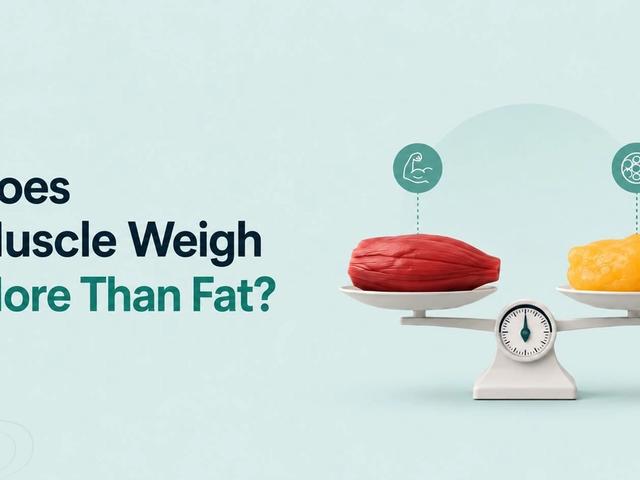
- Look at trends, not single weigh-ins. Day-to-day swings are normal for everyone. Our article on whether muscle weighs more than fat explains why the scales don't always reflect changes in your body composition.
- Use other measures too, such as how your clothes fit, your waist measurement or how much stronger you're getting in the gym.
Creatine isn't a fat burner, and it won't help you lose weight on its own. If you see marketing that suggests otherwise, treat it with caution.
How much creatine do women take?
There's no official UK recommended daily amount for creatine, because it isn't an essential nutrient: your body makes its own. In research:
- The EFSA opinion on muscle strength in over-55s was based on at least 3g a day, taken daily alongside regular resistance training.
- Studies in women have commonly used a daily maintenance amount of around 3 to 5g, according to the Nutrients review. Some studies start with a short, higher-dose "loading" phase, which is where temporary water weight is most likely.
A loading phase isn't essential. Taking a steady daily amount gradually builds up your muscle stores over a few weeks instead. Whatever you choose, don't exceed the dose on the product label, and check with a pharmacist if you're unsure what's appropriate for you.
Choosing a product
In the UK, food supplements are regulated as foods rather than medicines (the Food Standards Agency sets out the rules), so they aren't assessed for effectiveness in the same way as medicines. Plain creatine monohydrate is the form that's been studied most. Some products add caffeine, sweeteners or other stimulants, so read the label carefully. If you're unsure, a pharmacist can help you choose a straightforward product.
Is creatine safe for women?
For healthy adults taking recommended amounts, the evidence is reassuring. The Nutrients review describes creatine as a safe, low-risk supplement when consumed in recommended doses and regimens.
What about your kidneys?
Concerns that creatine damages the kidneys have circulated for years. A 2023 review in Nutrients looked at this specifically and concluded that controlled clinical trials do not support the claim, and that, based on studies using reliable methods to measure kidney function, creatine supplements have been shown to be safe for human consumption. The same review says more research is needed in people who already have kidney disease.
There's one practical point worth knowing. The 2023 review notes that creatine supplements can raise blood levels of creatinine in some people. Creatinine is a waste product doctors use as a marker of kidney function, so a raised level doesn't necessarily mean your kidneys are struggling, but it could affect how a routine blood test is read. If you're having blood tests, tell your GP or nurse that you take creatine.
Who might consider creatine, and who probably doesn't need it?
Creatine is most likely to be useful if you:
- Do regular strength training, or plan to, and want to support your progress
- Are an older adult following a resistance training programme
- Are losing weight and want to protect your muscle through strength work
You probably don't need it if:
- You're not doing any strength or high-intensity exercise. Without training, there's little evidence it helps.
- You'd rather focus on the basics first. The British Dietetic Association says a varied, well-balanced diet should provide the nutrients and energy needed for sport, and that supplements won't compensate for poor food choices.
How to get the most from strength training (with or without creatine)
Whether or not you choose to take creatine, these habits will do most of the work:
- Train your major muscle groups at least twice a week. The NHS physical activity guidelines recommend strengthening activities that work the legs, hips, back, abdomen, chest, shoulders and arms on at least 2 days a week.
- Start where you are. Bodyweight moves such as sit-to-stands and wall press-ups are a good starting point. The NHS has a set of simple strength exercises you can do at home.
- Progress gradually. Add repetitions, sets or a little weight over time, rather than jumping straight to heavy lifts.
- Spread your protein across the day. Including a source of protein at each meal supports your muscles. If you use shakes, our guide to protein shakes for weight loss explains what to look for.
- Rest and sleep. Muscles adapt between sessions, not during them.
If you're going through the menopause and noticing changes in your weight or body shape, our article on whether HRT causes weight gain looks at what the evidence says.
The bottom line
Creatine for women appears to work much as it does for men: it can help increase strength, power and performance when combined with regular strength training, usually without marked changes in body weight. For adults over 55, the European Food Safety Authority found it improves muscle strength when taken daily alongside resistance training. Research on bone, mood and brain health is promising but still early. Creatine is not a weight-loss supplement, and any early rise on the scales is usually water. It appears safe for healthy adults at recommended doses, but speak to your GP or pharmacist first if you have kidney problems, are pregnant or breastfeeding, or take regular medicines. If your weight is affecting your health, speaking to a clinician about your options is a sensible next step.
This article is for informational purposes only and does not constitute medical advice. Always consult with a qualified healthcare professional before starting any treatment.