High Protein Snacks: 15 Easy UK Ideas & Protein Counts
In this article
- How much protein do you need a day?
- Why choose a protein-rich snack?
- What does "high protein" on a label mean?
- 15 high protein snacks with protein per portion
- Dairy and dairy alternatives
- Eggs, meat and fish
- Plant-based snacks
- Snacks with around 10g of protein
- What about protein bars, shakes and balls?
- Watch the salt, saturated fat and sugar
- Easy high protein snack combinations
- If your appetite is small
- Frequently asked questions
Good high protein snacks include plain Greek-style yoghurt or skyr, cottage cheese, a boiled egg, a small piece of cheese, a glass of milk or soya drink, tofu, cooked chickpeas or lentils, a handful of nuts and peanut butter on wholegrain toast. According to the British Heart Foundation (BHF), a 150g pot of 0% fat Greek-style yoghurt gives about 15g of protein for under 100 calories, and one egg gives about 7g. Most UK adults need around 0.75g of protein per kg of body weight a day, so a protein-rich snack can be a simple way to top up, especially if your main meals are on the small side.
Below, we list 15 easy high protein snacks with their protein and calories per portion, explain how much protein you actually need, what "high protein" on a label legally means, and the salt, sugar and saturated fat traps to watch for.
At a glance
- The BHF says adults of a healthy weight need about 0.75g of protein per kg of body weight a day, which is around 45g for a 60kg woman and 55g for a 75kg man
- Some of the best-value high protein snacks are everyday foods: plain yoghurt, skyr, cottage cheese, eggs, milk, soya drink, tofu, pulses and nuts
- A 150g pot of 0% fat Greek-style yoghurt has about 15g of protein and 97 calories; a 150g pot of skyr has about 13.5g and 76 calories
- In the UK, a food can only be labelled "high protein" if at least 20% of its energy comes from protein
- Research suggests protein-rich meals and snacks help you feel fuller, but eating more protein won't cause weight loss unless your overall calories fall too
- Many "protein" bars and snacks contain added sugar, salt or saturated fat, so check the label
- If you have kidney disease, speak to your GP or a dietitian before increasing your protein intake
How much protein do you need a day?
Protein helps your body build and repair tissue, including muscle, skin and hair. In the UK, the reference amount for adults is based on body weight. The British Heart Foundation says an adult of a healthy weight needs about 0.75g of protein per kg of body weight a day. That works out at roughly:
- 45g a day for a 60kg woman
- 55g a day for a 75kg man
Needs go up in some situations. The BHF says people over 65 are advised to aim for about 1g to 1.2g per kg a day to help prevent age-related muscle loss, and that people doing intense strength training may need more too. It also recommends spreading protein across the day rather than eating it all in one go, with a palm-sized portion of protein at each meal as a rough guide.
Most people in the UK already get enough protein from their meals. Snacks are not essential, but if you get hungry between meals, have a small appetite, or find it hard to fit protein into breakfast and lunch, a protein-rich snack is an easy way to fill the gap. For a wider list of foods to build meals around, see our guide to high-protein, low-calorie foods.
Why choose a protein-rich snack?
The main reason people reach for high protein snacks is to feel fuller for longer. The evidence supports this, with some important caveats.
A review of the research on protein and weight management, published in the American Journal of Clinical Nutrition, found that higher-protein meals produced a modest increase in fullness and in hormones linked to satiety. However, the review did not find that this reduced how much people ate at their next meal. The same review reported that, in shorter-term controlled studies, reduced-calorie diets higher in protein led to more weight and fat loss, and better preservation of lean muscle, than lower-protein versions. Longer-term results were more mixed, and sticking to the diet appeared to be the biggest factor.
The BHF puts it simply: eating more protein without cutting down on your overall calories will not help you lose weight. Protein is still a source of energy, and any extra your body doesn't need is burned for energy or stored as fat.
So a high protein snack works best as a swap, not an extra. Choosing a yoghurt pot instead of a biscuit, or a boiled egg instead of crisps, is more useful than adding a protein bar on top of what you already eat. If you find snacking urges hard to manage, our guide to food noise looks at why some people think about food so often and what can help.
What does "high protein" on a label mean?
"High protein" is a legally defined nutrition claim in the UK. Under the UK version of the nutrition and health claims regulation, a food can only be labelled:
- "Source of protein" if at least 12% of its energy (calories) comes from protein
- "High protein" if at least 20% of its energy comes from protein
You can check this yourself. Trading Standards guidance notes that 1g of protein provides 4 calories. So multiply the grams of protein by 4, divide by the total calories, and multiply by 100. For example, a 200-calorie bar with 10g of protein gets 40 calories from protein, which is 20% of its energy, just enough to qualify.
That threshold is not very high, and a "high protein" label doesn't tell you anything about sugar, salt or fat. A survey of eight UK supermarkets, presented to the Nutrition Society in 2023, found 1,200 products carrying protein claims in 2021. Of the 428 products with a "high protein" claim that the researchers assessed, 351 met the legal threshold. The authors also raised concerns that some products with protein claims were high in sugar or saturated fat.
15 high protein snacks with protein per portion
The figures below come from the British Heart Foundation's list of high-protein, low-calorie foods and its examples of snacks with around 10g of protein. Brands vary, so check the label on the product you buy.
Dairy and dairy alternatives
| Snack | Portion | Protein | Calories |
|---|---|---|---|
| 1. 0% fat Greek-style yoghurt | 150g | 15g | 97 kcal |
| 2. Skyr | 150g | 13.5g | 76 kcal |
| 3. Low-fat plain yoghurt | 150g | 8g | 95 kcal |
| 4. Cottage cheese | 60g | 8g | 88 kcal |
| 5. Cheese | 30g | 8g | 125 kcal |
| 6. Milk | 200ml | 7g | 92 kcal |
| 7. Soya drink | 200ml | 7g | 66 kcal |
Greek-style yoghurt and skyr are two of the most protein-dense snacks you can buy. Plain versions are best, as the BHF advises avoiding protein sources that are high in sugar, such as flavoured yogurts. Add a handful of berries or a sprinkle of oats for sweetness and fibre.
Cottage cheese is lower in calories than most cheese for the same protein. Try it on oatcakes or rye crackers, or with sliced cucumber and black pepper.
Hard cheese is a good source of protein and calcium, but it's also higher in calories, saturated fat and salt, so keep to a small portion. The British Dietetic Association describes a 30g portion of hard cheese as about the size of a small matchbox.
Milk and soya drink are easy to forget as snacks. A glass of milk or a milky coffee adds protein without much effort. If you choose a plant-based drink, the BHF notes that soya is one of the plant sources that contains all the essential amino acids. Go for unsweetened, calcium-fortified versions.
Eggs, meat and fish
| Snack | Portion | Protein | Calories |
|---|---|---|---|
| 8. Egg | 1 egg | 7g | 72 kcal |
| 9. Cooked chicken, turkey or fish | 100g | 30g | 175 kcal |
Eggs are one of the most practical high protein snacks. Boil a few at the start of the week and keep them in the fridge. Pair one with a handful of cherry tomatoes for a more filling snack.
Leftover chicken, turkey or fish makes a quick high protein snack. A full 100g portion is closer to a meal, so a smaller amount, such as a few slices of chicken in a lettuce wrap or half a small tin of tuna on a rye cracker, is usually enough between meals. Choose fish tinned in water or brine rather than oil if you're watching calories, and rinse brined fish to reduce salt.
Be more careful with processed meats such as ham, salami and jerky. They're high in protein but often high in salt, and the BHF advises limiting processed meats when increasing your protein intake.
Plant-based snacks
| Snack | Portion | Protein | Calories |
|---|---|---|---|
| 10. Tofu | 100g | 8g | 73 kcal |
| 11. Cooked lentils, chickpeas or beans | 100g | 8g | 100 kcal |
| 12. Baked beans | 200g | 10g | 162 kcal |
Tofu can be cubed and baked or air-fried until crisp, then eaten hot or cold. Like soya drink, it provides all the essential amino acids.
Pulses such as chickpeas, lentils and beans give you protein and fibre together. Roasted chickpeas make a crunchy alternative to crisps, and hummus with carrot or pepper sticks is an easy option at work. Edamame (young soya beans) are another good choice, though the protein content depends on the product, so check the pack.
Baked beans on a slice of wholegrain toast is a more substantial snack. Choose lower-salt, lower-sugar versions where you can.
For more plant-based options, our guide to high protein vegan foods lists protein per portion for tofu, tempeh, seitan, pulses, nuts and seeds.
Snacks with around 10g of protein
The BHF gives these as examples of snacks providing about 10g of protein:
- A handful of nuts. Nuts also contain fibre and mostly unsaturated fats, but they're high in calories, so a small handful is enough. Choose unsalted.
- 2 tablespoons of peanut butter on wholegrain toast. Look for 100% nut versions without added sugar or palm oil.
- Wholegrain cereal with milk or soya drink. A small bowl works as a snack as well as breakfast. Pick a cereal that isn't coated in sugar or honey.
What about protein bars, shakes and balls?
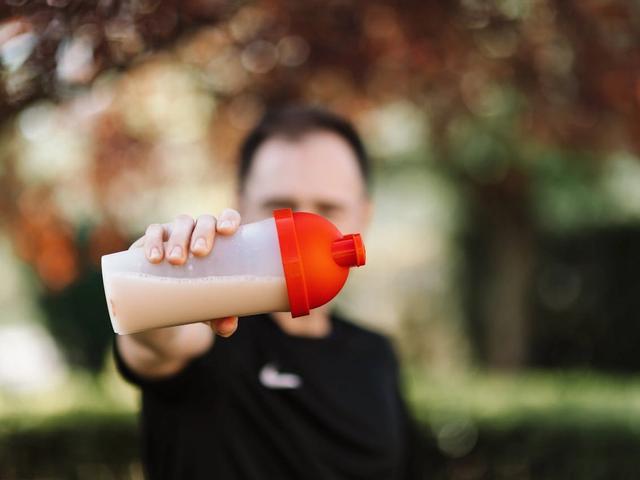
Supermarket shelves are full of products marketed as high protein, from bars and balls to crisps, puddings and drinks. The BHF says that for most people these products aren't necessary, because a balanced diet already provides enough protein, and that many contain added sugars and fats that make them higher in calories. They can be useful in some situations, for example for people with a poor appetite, difficulty chewing or who are recovering from illness, but the BHF suggests checking with your doctor first in those cases.
If you do buy them, a few checks help:
- Look at the calories as well as the protein. Some bars have as many calories as a chocolate bar.
- Check the sugar. The front-of-pack traffic lights make this quick, and plain dairy or nut-based options usually have less.
- Don't let them replace meals regularly. Whole foods such as eggs, yoghurt and pulses also give you fibre, vitamins and minerals.
We look at the evidence on shakes in more detail in our guide to protein shakes for weight loss.
Watch the salt, saturated fat and sugar
Some foods that are high in protein are also high in things most of us need to cut down on. The British Nutrition Foundation sets out the daily maximums for adults:
- Salt: no more than 6g a day
- Saturated fat: no more than 20g a day for women and 30g a day for men
- Free sugars: no more than 30g a day
Salt is the one to watch most closely with savoury protein snacks. The BHF reports that adults in England eat an average of 8.4g of salt a day, well above the recommended maximum. Processed meats, jerky, salted nuts, cheese and some flavoured roasted chickpeas can all add up. On front-of-pack labels, the BHF explains that more than 1.5g of salt per 100g counts as high (red), while 0.3g or less per 100g is low (green).
Easy high protein snack combinations
Pairing protein with fibre-rich foods like fruit, vegetables and wholegrains makes a snack more filling and adds nutrients that protein foods often lack. The NHS recommends adults aim for 30g of fibre a day, and most of us fall short. Some easy pairings:
- Plain Greek-style yoghurt or skyr with berries and a spoonful of oats
- Cottage cheese on oatcakes with sliced tomato
- A boiled egg with cherry tomatoes or cucumber sticks
- Hummus with carrot, pepper or celery sticks
- An apple with a tablespoon of peanut butter
- Baked tofu cubes with edamame and a squeeze of lime
- A glass of milk or soya drink with a small handful of unsalted nuts
Our guide to how much fibre you need per day has more ideas for building fibre into meals and snacks.
If your appetite is small
Some people find it hard to eat enough protein because their appetite is low, whether that's because of age, illness, or weight-management treatment that reduces hunger. In these situations, small, protein-rich snacks can make a real difference, because they're easier to manage than a large meal.
If you're having weight-management treatment that reduces your appetite, the BHF advises making sure you eat enough protein to help maintain muscle while you lose weight. It suggests spreading protein across your meals and doing muscle-strengthening activity, such as lifting weights, squats or carrying heavy shopping, on at least 2 days a week. A dietitian or another healthcare professional can help you work out a protein target that's right for you.
The bottom line
The best high protein snacks are usually simple, everyday foods: plain Greek-style yoghurt or skyr, cottage cheese, eggs, milk or soya drink, tofu, pulses, nuts and peanut butter on wholegrain toast. Most UK adults need around 0.75g of protein per kg of body weight a day, and a protein-rich snack can help you feel fuller between meals. It works best as a swap for a less filling snack rather than an extra, because protein still counts towards your overall calories. A "high protein" label only means at least 20% of a food's energy comes from protein, so check packaged snacks for added sugar, salt and saturated fat. If you have kidney disease or any other health condition, speak to your GP or a dietitian before making big changes to your protein intake.
This article is for informational purposes only and does not constitute medical advice. Always consult with a qualified healthcare professional before starting any treatment.